It will come as no surprise that this is sparked from a Seth Godin post. Specifically, I want to zero in on his final assertion “The secret to doing the right thing is to make it feel, at least right now, like the urgent thing instead.”
In my line of work, there is an abundance of “I ‘should’ be…” tasks. In my experience, I never feel caught up, and pressure will always exist to focus on ‘shoulds’ that, to me anyway, feel like distractions. What makes it difficult is that these distractions are truly valid requests – they are grounded in legitimate concerns, and they have real consequences.
I’m sure I’m not alone.
As a result, it is easy to feel stuck. What is a priority to you feels in conflict with the priorities of others.
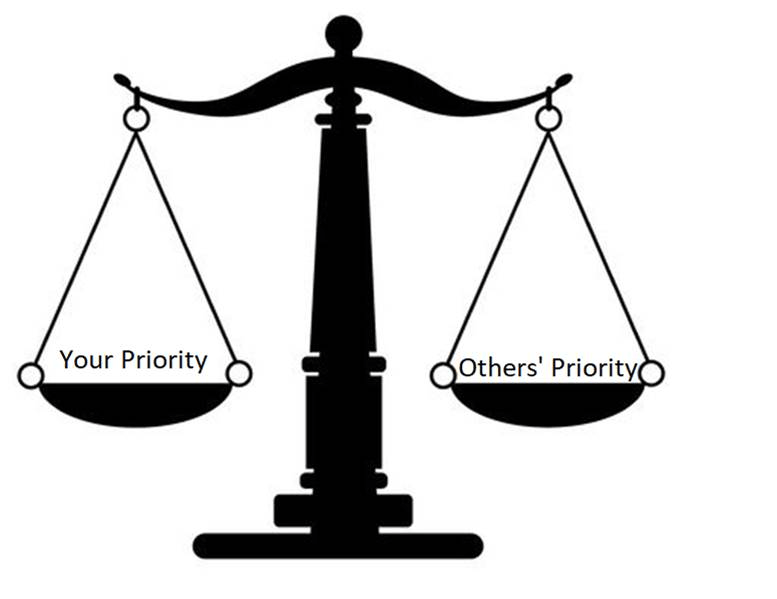
‘Shoulds’ are always a balancing act: Who defines the urgency?
What makes these two types of ‘shoulds’ difficult to balance is that the urgency from external ‘shoulds’ are not defined for you. Someone else wants them, you likely have a vested interest in keeping the requestor happy, and the ask is often accompanied with a sense of urgency. In aggregate you may be chasing impossible deadlines, but there is at least a sense of clarity around it being the ‘right’ work. In other words, your priorities are socially validated.
The problem is, this feeling of clarity can be a trap. Your priorities and the priorities of others are on a balancing scale. If you do nothing else but try to satisfy everyone, you will fail.
Enter: Locus of Control
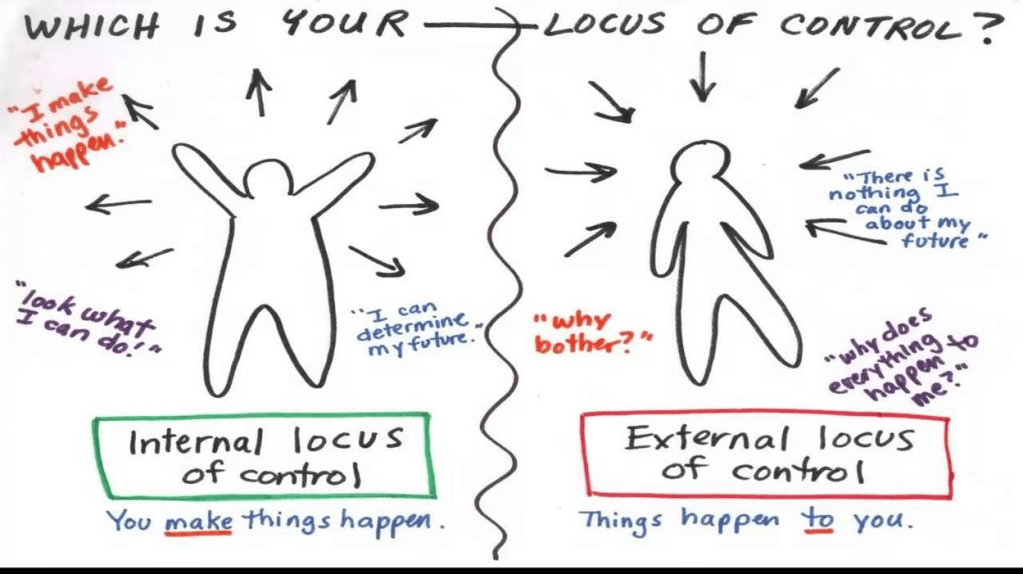
There are two extremes – Internal and External. For our purposes, the difference is your sense of control around what you can do, what is important, and what outcome can be achieved.
This does not mean the laws of time constraint and work volume do not exist. What I’m calling out is how you define your boundaries, your deliverables, and even the cadence of your day so that you can maximize your effort and provide your best value.
To put this another way, let’s acknowledge that you care about your ‘Shoulds’, and recognize that meeting them impacts your overall success. So, what does applying internal locus of control look like?
Meetings keep getting scheduled over lunch.
Vs.
I have a conflict from 12-1pm, what other options are there?
I have too much client work.
Vs.
What can I get done, what is the consequence for tasks that will be late, and who needs to know?
You’ll certainly have to give ground, but not every time.
‘Shoulds’ are always a balancing act: Who defines your direction?
A sense of purpose will help inform what you take on from others while still providing space to accomplish what is most important to you. It will also guide you in determining what you give up or turn down.
If you don’t know what is important, that is ok. Ask. Have conversations. Learn. And when you hear an answer, privately evaluate the question: “Do I agree?”
When you do have something you are passionate about, here are some ideas:
- Pitch early and often
- Change moves slow, and affecting change defines you. Speaking things into existence is a fallacy, but speaking about them will help support and frame your actions. In other words, become the person who cares about and delivers on ‘X’. Annoy everyone with the topic.
- Work your ‘shoulds’ into your goals
- Your goals in effect are your professional aspirations. They define what you are reaching for. They are also yours alone, though others may support you in them and they generally need to align with company initiatives. Shape your goals to match your interests, strengths, and aspirations; having a goal that plays to each is not a bad idea.
- Evaluate your risks, and monitor your casualties
- By having an endless supply of ‘Shoulds’, you will always have a dropped ball. But each ball is different. Some bounce, some roll away, and some leave a giant crater in the ground. Which one hits the hardest, which one can fall because it will come back later, and what can you afford to let roll away?
‘Shoulds’ are always a balancing act: Not every challenge is worth taking on.
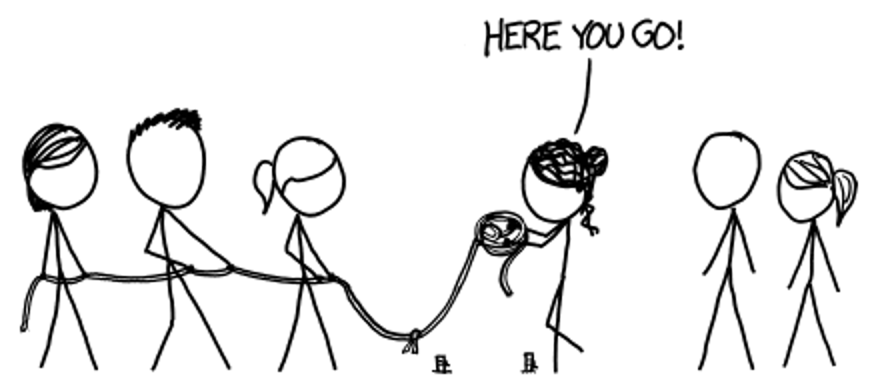
Finding the balance and making the right ‘shoulds’ urgent is hard and ongoing. You will miss, but as best as you can, don’t miss in isolation. And if you figure out how to nail it every time, let me know. I’m still learning.
 David Whitcher